
Representation Matters: Mentorship as a Bridge to Belonging
By: Jessica Tellez, Aspiring Latino Leaders Fellowship Alum
Growing up on the border in El Paso, Texas, my education was deeply affirming in ways I only came to fully realize and appreciate later. In public schools, the majority of teachers and school leaders were Latino. Spanish (and Spanglish) were spoken freely, and traditions from our cultura were woven into the classroom, not treated as an aside. I learned early on that my identity was a source of strength, not something to minimize.
That experience continued at the University of Texas at El Paso (UTEP), a Hispanic-Serving Institution where diversity was not relegated to an initiative, but was a lived reality. Being surrounded by peers, professors, and leaders who shared my background reinforced a strong sense of belonging. My culture was part of daily life, not tucked away into a grocery store aisle or celebrated once a year. I was never made to feel “other.”
It was only after moving to New England that I realized how formative and privileged that experience was. Today, working across Massachusetts and Rhode Island, I’ve witnessed a different reality. Many students of color attend schools where few adults share their language, culture, or lived experiences. In both states, Latino students are among the fastest-growing populations. In Rhode Island, they account for almost 30 percent of the public K-12 population. In Massachusetts, it’s 25 percent. Yet, Latino educators make up less than 5 percent of the teaching workforce across both states. Massachusetts has recognized this gap, with efforts such as the Educator Diversity Act aimed at increasing the number of educators of color across the state.
At Coaching4Change (C4C), mentorship is our way of bridging that divide. We pair K–12 students with college mentors, many of whom are first-generation college students and identify as Black, Indigenous, and People of Color (BIPOC), bringing their lived experiences to their work. Research shows that students with teachers or mentors who reflect their background are more likely to feel connected to school, achieve academically, and aspire to enroll in postsecondary education. In the Title I schools we serve, where students are overwhelmingly Black, Latino, and multilingual learners, our mentors offer more than academic support. They offer affirmation, connection, and a belief in what is possible.
Representation in our model is intentional. Many of our college mentors speak multiple languages, have navigated systemic barriers, and understand the importance of being seen and valued. Cross-age mentoring builds trust and belonging, two critical drivers of student engagement and long-term success. It creates spaces where students do not have to question if they belong. They know they do.
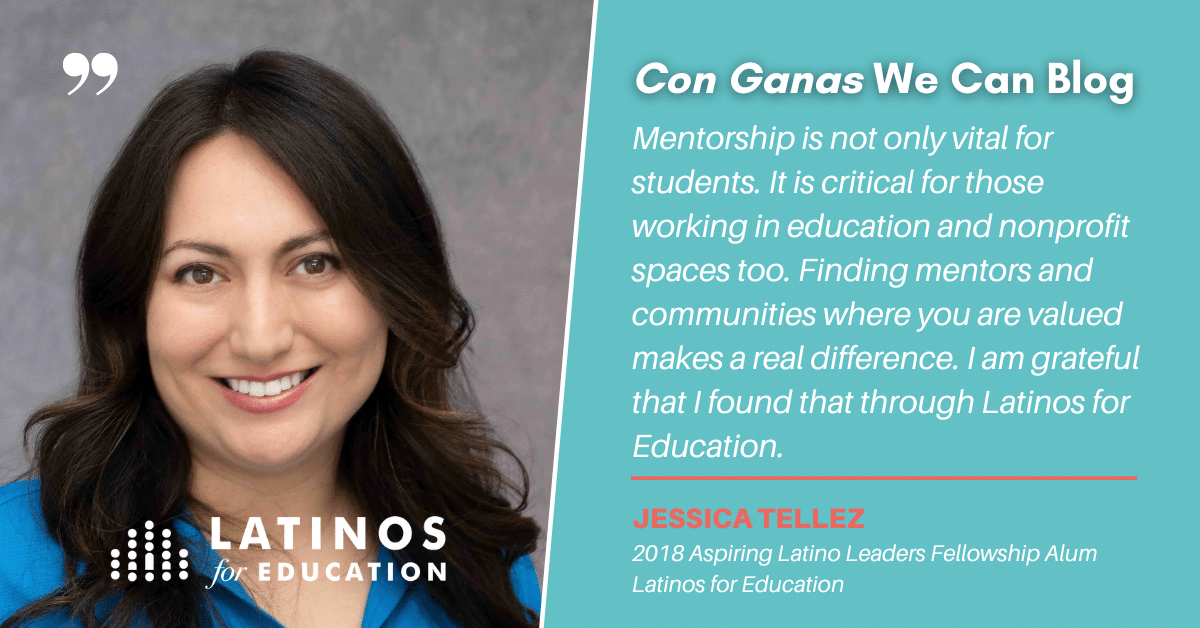
Mentorship is not only vital for students. It is critical for those working in education and nonprofit spaces too. Finding mentors and communities where you are valued makes a real difference. I am grateful that I found that through Latinos for Education. As an alumna of the Aspiring Latino Leaders Fellowship, I experienced the power of being surrounded by leaders who both challenge and uplift you and who invest in your growth because they see your full potential.
Now, as Chief People Officer at Coaching4Change, I carry that commitment forward. Building an organization where belonging is the foundation, not an afterthought, is core to my work. It is not enough to recruit diverse staff. We must create environments where people are realized, where their full selves are seen and celebrated. Especially now, when inclusion feels fragile, we must lean intentionally into comunidad, identidad, and purpose.
Mentorship is not simply a program or HR strategy. It is a movement toward a more just and inclusive future. It is a promise that young people, no matter their background, deserve to see themselves reflected in every space of opportunity. I am proud to be part of that work and proud to stand alongside a network like Latinos for Education that believes in the power of mentorship, representation, and belonging.
——————
Jessica Tellez is the Chief People Officer at Coaching4Change and an alumna of Latinos for Education’s 2018 Aspiring Latino Leaders Fellowship. A proud first-generation college graduate, she brings over a decade of experience in education and workforce development, championing equity, representation, and culturally grounded leadership.


